
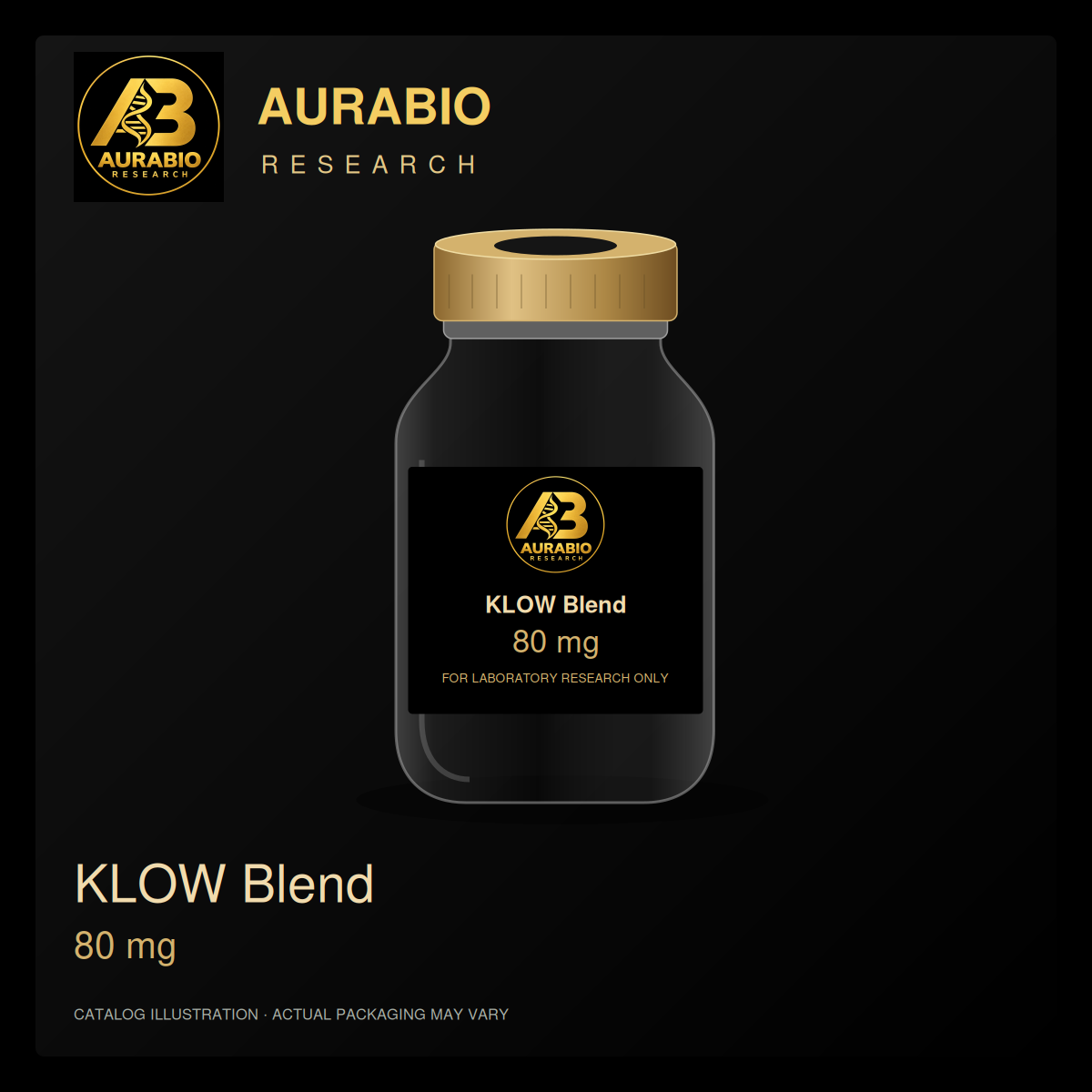
About KLOW Blend
Component studies only · Exact combination not validated
What it is studied for
An owner-specified mixture of GHK-Cu 50 mg, TB-500 10 mg, KPV 10 mg and BPC-157 10 mg, totaling 80 mg. Components have been investigated in matrix biology, inflammatory signaling and cell-migration assays.
What selected research found
GHK-Cu increased matrix accumulation in a rat wound model. KPV reduced inflammatory signaling in cells and experimental mouse colitis. BPC-157 promoted tendon-fibroblast migration in laboratory studies. Ho et al. analyzed a seven-residue TB-500 fragment; that was an identification study, not an efficacy trial.
Evidence limits
A study validating this exact four-component formulation and ratio has not been supplied. Component findings do not establish synergy or benefits of the blend. Confirm the TB-500 sequence: full-length thymosin beta-4 evidence cannot automatically be applied to a fragment. Composition remains subject to genuine lot documentation.
Selected sources
- Maquart et al., 1993 — GHK-Cu rat model ↗
- Dalmasso et al., 2008 — KPV cell and mouse models ↗
- Chang et al., 2011 — BPC-157 tendon-fibroblast study ↗
- Ho et al., 2012 — TB-500 analytical identification ↗
References reviewed October 10, 2026.
Research use only. These notes summarize selected publications; they are not a systematic review, medical advice, dosing instructions, or evidence about this product lot. Clinical studies used controlled study formulations and supervision. AuraBio materials are not for human or veterinary use. Review the exact material identity and available lot documentation for your laboratory application.
Reviews
There are no reviews yet.